Free-form entry eg: '125000km', '1.5 million inches', '$67bn', '45000000 AUD', 100years', '123456789', '1 trillion', '1.5e6', '25 million kg'
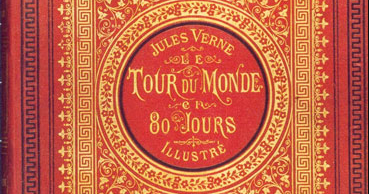
Is That a Big Number is now a book, published by Oxford University Press. (Google ISBN 0198821220 to find many online booksellers). Although there is serious purpose behind the book - to explore how we think about numbers and how we can understand big numbers - it’s written in a light and engaging style.
Entertaining, full of practical examples, and memorable concepts, Is That A Big Number? renews our relationship with numeracy. If numbers are the musical notes with which the symphony of the universe is written, and you’re struggling to hear the tune, then this is the book to get you humming again.
$267 billion in tariffs. Is That a Big Number?
Misplaced decimal point endangers lives
Violent Crime Rate in the USA: 50% down from peak 25 years ago
Making Sense of Air Pollution Statistics
2,043,599 Pennies is a big number but is it Art?
How old are Olympians? (for each sport)
GDP: a Predictor of Olympic Gold?
Guide to Spotting Dodgy Statistics
HK-Zhuhai-Macao Bridge Meets in the Middle
200 Terabyte Mathematical Proof
This video recreates the classic “Powers of Ten” film, zooming out to larger and larger scales to the limits of our understanding of the universe, and then zooming in again, down to the smallest things we know about.
It’s an excellent way of illustrating relative magnitudes of distance. One gripe: it all happens a bit too quickly: try watching it at half speed.
Take a set of numbers collected from “the wild”. You might take company profits, city population statistics, street numbers or odometer readings. How many of the numbers in your set start with “1″? how many with “2″? with “3″?, “4″? …
Amazing as it sounds, these leading digits are NOT evenly distributed but follow a pattern (30% “1″s, down to less than 5% “9″s). This pattern is so reliable, it’s been used in fraud detection, to trap companies cooking their books: the invented numbers did not follow Benford’s Law.
Follow the link for a fascinating explanation of why this is so.
Yes, there's now an engaging, informative book based on these numbers. Oxford University Press: July 2018.
Click here to learn more about it.
Click here for Podcast: Andrew Elliott interviewed for New Books Network.